Availability usually decides propane vs. natural gas: no utility main on your street means propane. Because propane carries about 91,500 BTU per gallon and natural gas about 1,030 BTU per cubic foot, never compare price per gallon to price per therm - convert both to dollars per million BTU. Appliances need a conversion kit and orifice change to switch fuels, and only a licensed gas professional should do it. Propane vapor pools low; natural gas rises.
The propane vs. natural gas decision usually gets settled by a fact outside your control: whether a utility gas main runs down your street. If one does, natural gas is on the table. If it does not, propane is the practical route to gas appliances, and the rest of the comparison is academic.
That said, plenty of buyers do have a genuine choice, and plenty more want to understand what they are giving up. The two fuels behave differently in energy content, delivery model, appliance compatibility, outage performance, and – importantly – in how they behave when they leak.
Here is an honest comparison from a supplier that ships tanks nationwide, including the parts that do not favor propane.
Propane vs. Natural Gas: The Fundamental Difference
Natural gas is primarily methane, delivered continuously through a pipeline network from a utility main to a meter on your house. You never store it. You use it as it arrives, and you pay for what the meter counts.
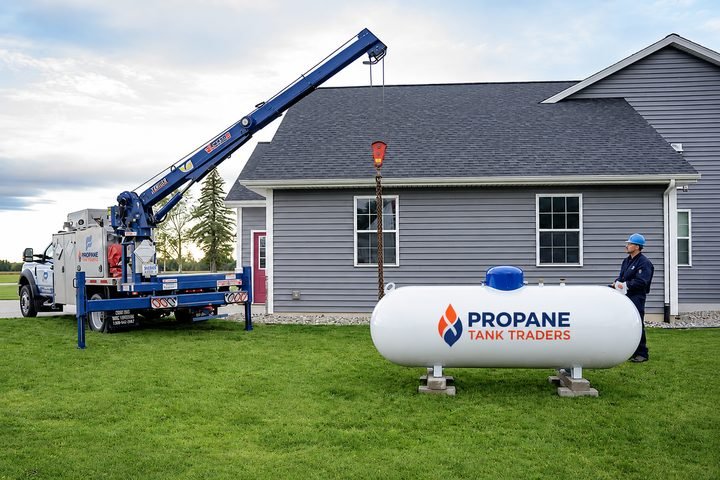
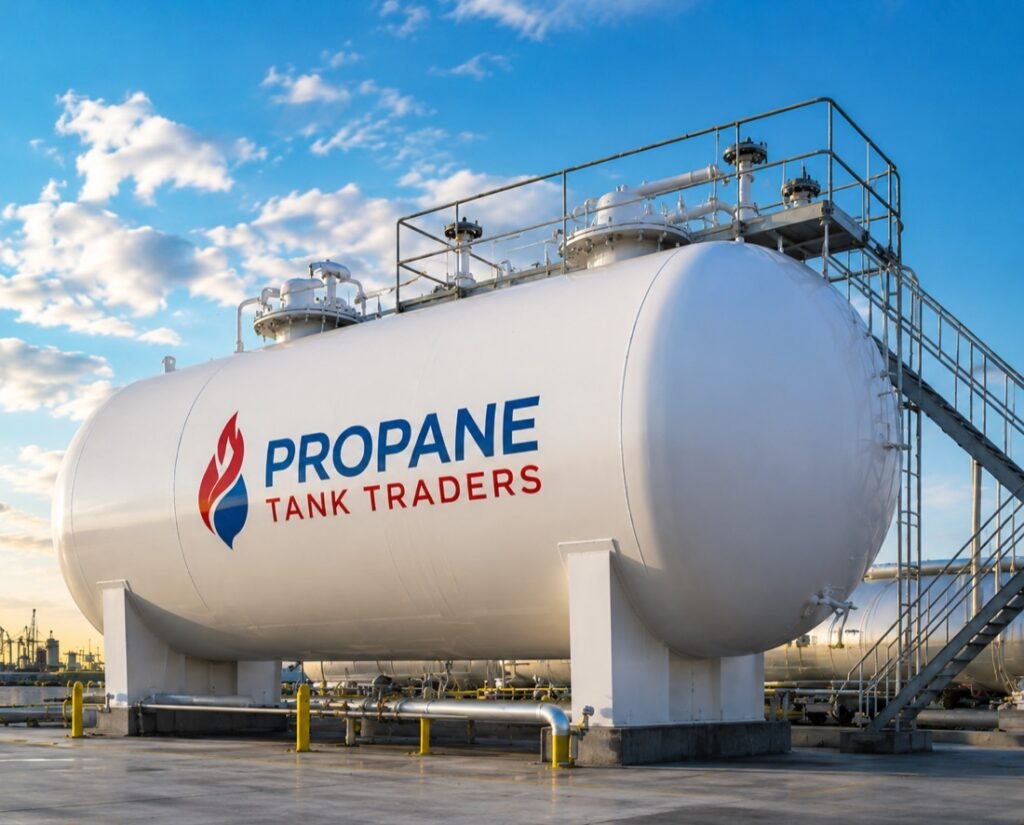
Propane is a different molecule. It is delivered by truck and stored on your property as a liquid under pressure in a tank you either own or lease. It vaporizes back to gas on the way to your appliances. You buy it in batches, and you own the inventory sitting in the tank.
That single structural difference – piped-on-demand versus stored-on-site – drives nearly every practical distinction between the two fuels. It explains the cost structure, the outage behavior, the supply risk, and the reason one requires a tank in your yard.
Availability Is Usually the Deciding Factor
Utilities extend gas mains where population density justifies the capital cost. In dense suburbs and cities, that math works. In rural areas, on long private drives, and in newer developments outside the service footprint, it often does not.
If there is no main on your street, your options are a line extension quoted by the utility – which can be a very large number, sometimes tens of thousands of dollars for a long run – or propane. This is why propane dominates rural America. It is not a preference; it is availability.
Before you weigh anything else in the propane vs. natural gas comparison, call your local utility and ask two questions: is there a main at my address, and what would a service line extension cost? The answers frequently end the analysis.
Energy Content: Why Per-Unit Prices Mislead
This is where most comparisons go wrong. The two fuels are sold in different units with wildly different energy content, so comparing the sticker numbers tells you nothing.
- Propane: roughly 91,500 BTU per gallon of liquid.
- Natural gas: roughly 1,030 BTU per cubic foot; a therm is 100,000 BTU, and utilities commonly bill per therm or per hundred cubic feet (CCF).
A gallon of propane carries about 89 times the energy of a cubic foot of natural gas. So a price per gallon and a price per cubic foot are not remotely comparable numbers, and anyone quoting them side by side is doing you a disservice.
The only defensible comparison is cost per BTU, or its more readable cousin, cost per million BTU (MMBtu). Convert both to the same denominator:
- Propane: divide your delivered price per gallon by 91,500, then multiply by 1,000,000. Or more simply, multiply price per gallon by about 10.9 to get dollars per MMBtu.
- Natural gas: multiply your all-in price per therm by 10 to get dollars per MMBtu. Include the fixed monthly customer charge, distribution fees, and taxes – not just the commodity line.
- Adjust for appliance efficiency if the two setups differ. A 95 percent condensing furnace and an 80 percent unit change the delivered-heat math.
We will not quote current fuel prices here, and you should be skeptical of any article that does. Propane and natural gas pricing is regional, seasonal, and volatile. Rates that were accurate when a page was published are frequently stale within a year. Run the arithmetic on your own actual quotes.
The general pattern most buyers encounter is that piped natural gas tends to be cheaper per BTU where it is available, because there is no trucking, no storage, and no tank. That pattern is not universal and it is not a promise.
Appliance Compatibility: Propane vs. Natural Gas Are Not Interchangeable
Why an orifice change is mandatory
You cannot move an appliance from one fuel to the other by swapping the hose. Propane is delivered to the burner at a much higher pressure and carries far more energy per cubic foot, so it needs a physically smaller orifice to meter the correct amount of fuel.
Converting an appliance requires a manufacturer’s conversion kit: new burner orifices, a regulator or regulator spring change, and often gas valve adjustment. Not every appliance has a kit available, and using one that is not made for your exact model is unsafe.
Running a natural gas appliance on propane without conversion produces gross over-firing – a large, sooty, yellow flame, dangerous heat, and carbon monoxide risk. Running a propane appliance on natural gas starves it and can cause unstable ignition. Neither is a do-it-yourself situation.
Conversions must be performed by a licensed gas professional, and in most jurisdictions the work requires a permit and inspection by your authority having jurisdiction. If you are switching fuels, budget for conversion or replacement of every gas appliance in the house.
Efficiency and performance
Appliance efficiency is a property of the appliance, not the fuel. A 96 percent condensing furnace is 96 percent efficient on either gas. Where propane earns a reputation for stronger performance is in high-demand applications: its higher energy density per cubic foot lets a given pipe size deliver more BTU, which helps with tankless water heaters and large cooktops on long runs.
Infrastructure and Up-Front Cost
The two fuels front-load cost very differently. Natural gas requires a utility connection; propane requires a tank.
| Factor | Propane | Natural gas |
|---|---|---|
| Delivery model | Truck delivery, stored on site as liquid | Continuous supply from utility main |
| Energy content | ~91,500 BTU per gallon | ~1,030 BTU per cubic foot |
| Up-front cost | Tank purchase or lease, pad or excavation, gas piping | Utility tap fee, service line trenching, meter set, gas piping |
| Ongoing billing | Pay per delivery; you carry the inventory | Monthly meter bill plus fixed customer charge |
| Availability | All 50 states, anywhere a truck can reach | Only where a main already runs |
| Behavior in a leak | Heavier than air; pools in low areas | Lighter than air; rises and disperses |
| Outage behavior | Supply on site; unaffected by grid outages | Pipeline usually keeps flowing; depends on utility system |
| Governing codes | NFPA 58, ASME Section VIII, 49 CFR Part 180 | Utility tariff, NFPA 54, local code |
On the propane side, current listed pricing runs about $741 to $1,450 for a 120-gallon tank, $650 used to $2,350 new for a 250-gallon, and $820 used to $2,420 for a 500-gallon underground unit. A 1,000-gallon vessel ranges from $950 scrapped to $5,300 new underground. Freight is a flat $350 per order in the contiguous U.S., with Alaska and Hawaii quoted separately, and delivery is typically 3-10 business days. Installation, piping, and excavation are separate and are quoted locally.
On the natural gas side, the utility sets a tap or connection fee and charges for the service line run from the main to your meter. Short runs in built-out neighborhoods can be modest. Long runs are not. Get a written quote before assuming natural gas is the cheaper entry point.
Our cost guide breaks down tank pricing by size, and the buy vs. rent comparison covers the ownership question, which materially changes propane economics.
Reliability, Storage, and Supply Security
Natural gas service is generally very reliable. Pipelines are underground and usually keep flowing through storms that take down power lines. Interruptions happen but are uncommon.
Propane’s advantage is different in kind: the fuel is already on your property. A full 500-gallon tank is an energy reserve you physically control. During extended grid or road disruption, you are running on inventory rather than on someone else’s continued service.
The flip side is real. You have to manage that inventory. Run the tank empty and you wait for a delivery truck, and in a regional cold snap that wait can stretch. You also carry price exposure at each fill rather than a smoothed monthly rate.
Both fuels pair well with a standby generator, which is a common reason rural buyers upsize their tank. If you are sizing for generator backup, our tank sizing guide walks through the BTU math.
Safety and Environmental Differences
This is the most important technical distinction in the propane vs. natural gas comparison, and it is the one people most often get wrong.
Propane vapor is heavier than air. A leak sinks. It pools in basements, crawl spaces, pits, floor drains, and low outdoor ground, and it can sit there and accumulate. That is why propane tanks are not installed in basements or below grade in enclosed spaces, why NFPA 58 sets separation distances from openings and ignition sources, and why gas detectors for propane belong low on the wall.
Natural gas is lighter than air. A leak rises and disperses, which is generally more forgiving in an open structure, though it can accumulate in attics and against ceilings. Detectors for natural gas go high.
Both fuels are odorized with mercaptan so you can smell a leak, and both require the same immediate response: do not operate switches or anything that could spark, evacuate, and call the gas supplier or fire department from a safe distance. The Propane Education & Research Council publishes plain-language guidance at propane.com.
Both fuels burn cleaner than fuel oil or coal. Propane is not a greenhouse gas in its own right if released, which contrasts with methane, the primary component of natural gas and a potent greenhouse gas when it leaks from distribution systems. Natural gas typically produces slightly lower carbon dioxide per unit of energy at the burner. Reasonable analyses land in different places depending on how much weight they give upstream leakage.
Installation of propane systems is governed by NFPA 58, the Liquefied Petroleum Gas Code, and tank construction by the ASME Boiler & Pressure Vessel Code, Section VIII. Portable cylinders fall under 49 CFR Part 180 for requalification. Codes are available through NFPA and ASME, and the federal cylinder rules through the eCFR.
How to Decide Between Propane vs. Natural Gas
Work through it in this order.
- Call the utility. No main and an expensive extension quote means propane, and you are done.
- Get both numbers in dollars per MMBtu. Use a real delivered propane quote and a real all-in utility rate including fixed charges.
- Price the entry cost. Tank plus install versus tap fee plus service line, quoted in writing.
- Count your appliances. If you are switching fuels, every one needs conversion or replacement by a licensed professional.
- Weigh supply control. If outage resilience matters to you, on-site storage has value the spreadsheet will not show.
If propane is the answer, the next decisions are tank size and above ground versus buried. Our above-ground vs. underground guide covers that tradeoff.
The Bottom Line
Propane vs. natural gas is decided by availability far more often than by preference. Where a main exists, natural gas usually wins on cost per BTU and on not needing a tank. Where it does not, propane delivers the same appliance performance anywhere a truck can reach, with the added benefit of fuel you actually have on hand.
Do not compare price per gallon to price per therm, do not move appliances between fuels without a proper conversion kit and a licensed installer, and do respect the fact that propane pools low while natural gas rises. Local codes and your authority having jurisdiction have the final say on any installation.
If you land on propane, browse sizes in our tank shop or call (501) 218-9328 with your appliance list and we will help you size it.