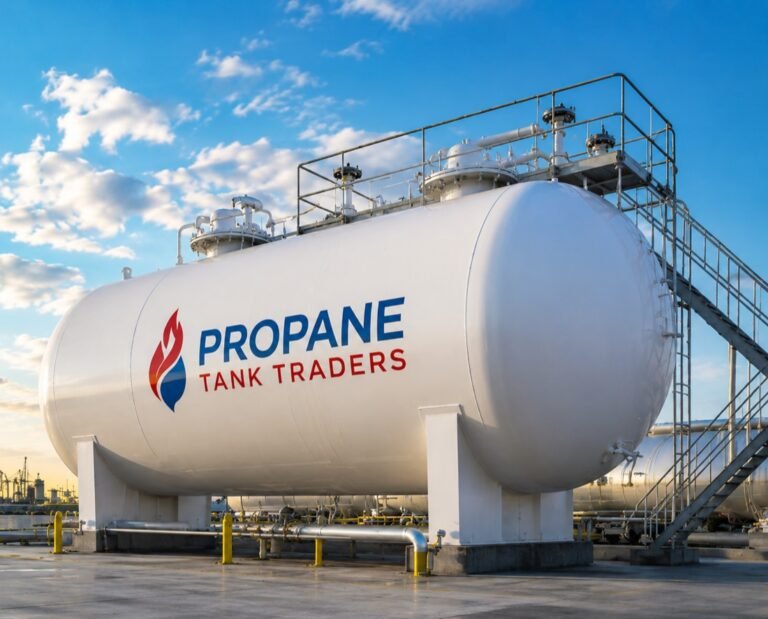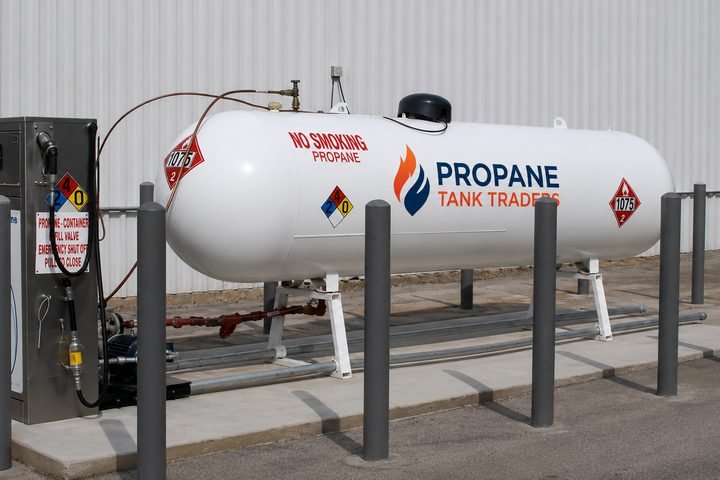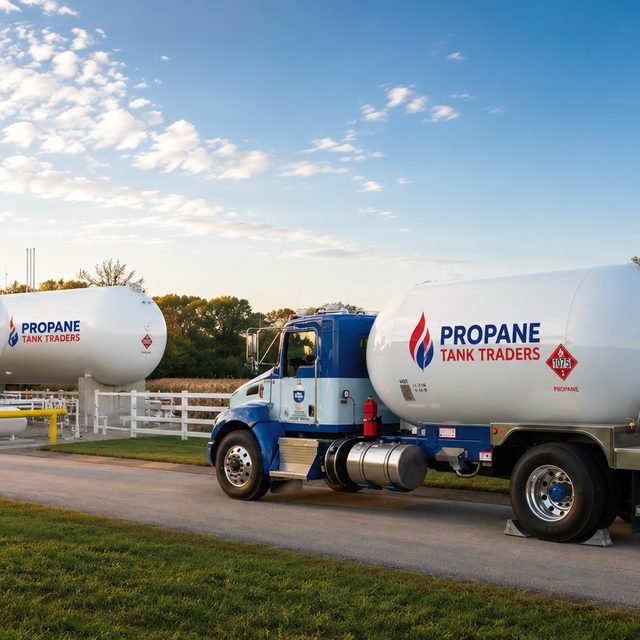
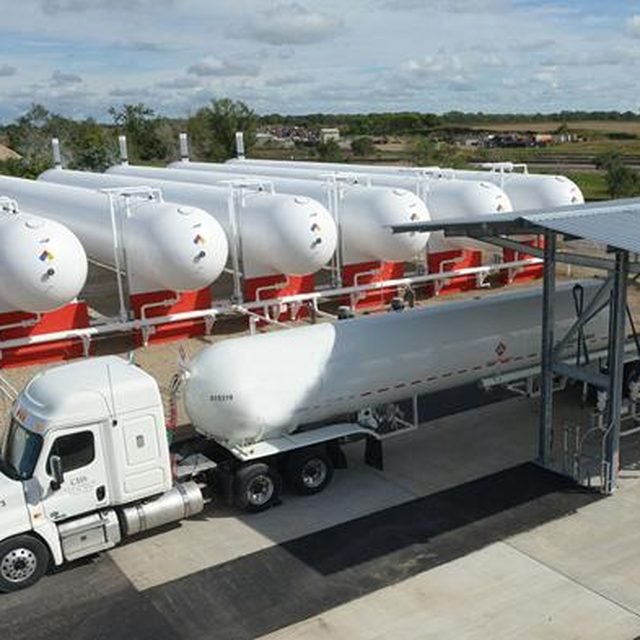
Ten propane safety practices every tank owner should know, starting with the exact emergency procedure if you smell the ethyl mercaptan odorant: no flames, no switches or phones, evacuate, shut off the supply valve only if safe, then call 911 and your supplier from a distance. Also covers odorant fade, never using cylinders indoors, the 80 percent fill rule, ice and vegetation clearance, post-flood inspections, CO alarms, light-colored paint, and professional leak checks under NFPA 58.
Most propane tank safety tips come down to one idea: propane is an extremely well-behaved fuel right up until it is not, and the difference is almost always something a person could have noticed or prevented. Propane systems have a strong safety record precisely because the rules around them are strict and specific.
The governing document is NFPA 58, the Liquefied Petroleum Gas Code, which covers container siting, filling, and system installation. Stationary tanks are built to the ASME Boiler & Pressure Vessel Code, Section VIII, and portable DOT cylinders are requalified on intervals set by 49 CFR Part 180.
Below are ten things every owner should know. Read tip one and tip two closely even if you skim the rest – they are the ones that decide outcomes in a real emergency.
Propane Tank Safety Tips for Emergencies
1. Know the smell, and know exactly what to do when you smell it
Propane is naturally odorless. Suppliers add ethyl mercaptan, an odorant that smells like rotten eggs, skunk, or a dead animal, so that a leak announces itself. If you smell that, treat it as a leak until a professional says otherwise. There is no version of this where waiting to see if it goes away is the right call.
The procedure, in order:
- No flames, no sparks. Do not light a match or lighter, do not smoke.
- Do not touch any electrical switch, appliance, thermostat, garage door opener, or landline. Do not use a cell phone inside the building. Any of these can produce an arc.
- Get everyone out immediately, including pets. Leave doors open behind you as you go.
- Shut off the main gas supply valve on the tank only if it is safe to reach – turn it clockwise. If reaching it means walking through the gas smell, skip this step and keep moving away.
- Call from a safe distance, from a neighbor’s home or a vehicle well away from the property. Call 911 and your propane supplier.
- Do not go back in. Not for pets, not for valuables, not to check the pilot light. Return only when a qualified professional or the fire department has cleared the property.
Before you ever need this, make sure everyone in the household knows where the main service valve is and which way to turn it. That is a five-minute conversation that pays for itself.
2. Do not rely on your nose alone
Odorant is a safeguard, not a guarantee. Odorant fade is real: the mercaptan can be absorbed or oxidized by rust and scale inside a container, adsorbed onto new steel or soil in an underground line, or diminished in a tank left sitting with residual air and moisture. Some people also have a reduced sense of smell from age, illness, medication, allergies, or simply being asleep. Colds and strong competing odors mask it further.
This is why performing a “sniff test” as your only leak detection strategy is a bad plan, and why propane gas detectors rated for LP gas – which is heavier than air and settles low – belong in any structure with propane appliances. Mount them low, per the manufacturer’s instructions, and test them on a schedule.
Everyday Propane Tank Safety Tips Around the House
3. Never store or use portable cylinders indoors or in enclosed spaces
Portable DOT cylinders – the 20 lb grill bottle, the 100 lb cylinder – do not belong inside a house, basement, garage, shed, crawlspace, tent, camper interior, or any enclosed space. Two separate hazards stack here. A slow valve leak fills a low space with vapor that has nowhere to go, and burning propane indoors without proper venting produces carbon monoxide.
The same rule covers appliances. Outdoor grills, patio heaters, turkey fryers, portable construction heaters, and generators are outdoor equipment. Every year people bring them into a garage during cold weather, and every year that decision proves fatal. Store spare cylinders outdoors, upright, secured, and shaded, away from ignition sources and building openings.
4. Understand the 80 percent fill rule
Propane tanks are filled to a maximum of about 80 percent of liquid capacity, never full. That headspace exists because liquid propane expands significantly with temperature – far more than water does. A container filled to the brim on a cool morning has nowhere to put that expansion when the sun hits it in the afternoon, and pressure climbs until the relief valve opens.
Practically, this means two things. Your 500 gallon tank holds roughly 400 gallons of usable propane, which matters when you are sizing a tank or budgeting a fill. And you should never accept an overfill or ask a driver to top it off past the fixed maximum liquid level gauge. If a relief valve is venting, keep people and ignition sources away and call your supplier.
5. Protect regulators, valves, and relief devices
The regulator is the part of the system most exposed to weather and most consequential when it fails. Keep it covered by its factory hood, and keep the vent opening pointed down and clear. In winter, clear snow and ice off the tank, the dome, and especially the regulator – ice in the vent can lock a regulator into the wrong position, and a heavy snow load can shear a line.
Clear it by hand or with a broom. Never use a shovel, a hammer, hot water, a torch, or a heat gun. Keep mud, leaves, wasp nests, and mulch away from the regulator and relief valve, and keep the dome on an underground tank from becoming a puddle that freezes.
6. Keep the area around the tank clear
Vegetation, stored items, and ignition sources creep toward tanks over the years. Keep a clear working perimeter so the tank is visible, accessible to the delivery driver, and not surrounded by anything that would carry fire to it.
- Cut back brush, tall grass, and vines. Do not let anything grow over an underground tank dome.
- Do not stack firewood, lumber, or trash against or under a tank.
- Keep grills, fire pits, burn barrels, and generators well away from the tank and its relief valve.
- Do not park vehicles or run mowers where they could strike the tank or the riser. Where impact is possible, bollards are required.
- Never build a deck, shed, or enclosure over or around a tank without the AHJ’s approval.
Propane Tank Safety Tips for Storms and Carbon Monoxide
7. After a flood or severe storm, the system stays off until it is inspected
Flooding is the situation that most often turns a working propane system into a dangerous one. Water can shift or float a tank off its foundation, strain or break the service line, and get into regulators, controls, and appliance burners. Wind and falling trees do the same to piping.
If your property floods or takes storm damage, shut off the gas supply valve if you can do so safely, and leave it off. Do not turn on appliances, do not relight pilots, and do not attempt to reset anything yourself. Have your propane supplier or a licensed technician inspect the container, the piping, the regulators, and every appliance before the system is put back in service. Appliance controls that have been submerged generally need replacement, not drying out.
8. Install CO detectors and keep appliances properly vented
Carbon monoxide is odorless, and propane detectors do not detect it – they are different devices. Install listed CO alarms on every level of the home and near sleeping areas, and replace them at the interval printed on the unit. If a CO alarm sounds, get everyone outside into fresh air and call 911.
Yellow, lazy, or sooty burner flames instead of crisp blue ones, soot around an appliance, persistent condensation on windows, or headaches and nausea that improve when you leave the house all point to incomplete combustion. Keep vents, flues, and chimney terminations clear of nests, snow drifts, and debris, and have appliances serviced annually by a qualified technician.
Painting, Requalification, and Professional Inspections
9. Paint tanks light, never dark
An above ground tank must be painted a light, heat-reflective color – white, silver, or light gray. This is a code requirement, not a style preference. A dark tank absorbs solar heat, which raises internal pressure and can push the relief valve toward opening on a hot day.
If you want the tank to disappear into the landscape, use screening plants set back at the distance your supplier and AHJ allow, or choose an underground installation instead. Keep the tank painted and rust-free, since surface corrosion under a failing coating is a common reason a supplier refuses to fill. Do not paint over the data plate, the valves, or the regulator.
10. Schedule professional leak checks and system inspections
A leak check is a documented pressure test performed with proper gauges, not a walk-around. Have one done whenever the system has been out of gas or shut off, after any appliance is added or moved, after any repair, and on a regular interval otherwise. Most suppliers require one before restoring service to a tank that ran empty, and that requirement exists for good reason.
Also track container-specific requirements. Portable DOT cylinders must be requalified on the intervals in 49 CFR Part 180 and cannot legally be filled once expired. Stationary ASME tanks do not expire the same way, but valves, regulators, and gauges are wear items with finite service lives – we cover the details in our guide to how long propane tanks last. The distinction between the two container types is explained in our ASME versus DOT comparison.
What You Should Never Do Yourself
The line here is simple and worth stating plainly. Any suspected leak, any damaged valve or regulator, any corroded or dented container, any repair to gas piping, and any relight after the system has been off is professional work. Soapy water can help a technician pinpoint a leak they already know about; it is not a substitute for a proper test, and it is not a reason to delay calling.
| Situation | Your action | Who fixes it |
|---|---|---|
| Smell of gas | Evacuate, no switches or phones, call from a distance | 911 and your propane supplier |
| Relief valve venting | Clear the area of people and ignition sources | Propane supplier |
| Tank ran empty | Close the service valve, leave appliances off | Supplier – leak check required before refill |
| Flood or storm damage | Shut off if safe, leave off | Licensed technician, full system inspection |
| Rust, dent, or damaged valve | Do not use, do not attempt repair | Supplier or licensed technician |
| Ice on regulator | Clear snow by hand or broom only | Supplier if the regulator malfunctions |
The Bottom Line
The propane tank safety tips that matter most are unglamorous: know the smell and the evacuation procedure, do not bring portable cylinders or outdoor appliances indoors, respect the 80 percent rule, keep the tank clear and correctly painted, and let a licensed professional handle anything involving pressure, piping, or a suspected leak. Standards like NFPA 58 exist because those specific failure modes are the ones that recur.
For the household-level material worth reading once and keeping, PERC publishes plain-language consumer safety guidance, and NFPA covers the code side. Local rules and your AHJ always have final say over what is permitted at your address.
If you are buying a tank and want to get the siting right from the start, our installation guide and buyer’s guide cover site selection and permits, and you can see current inventory in the shop. Questions about a specific container are welcome at (501) 218-9328 or through our contact page.